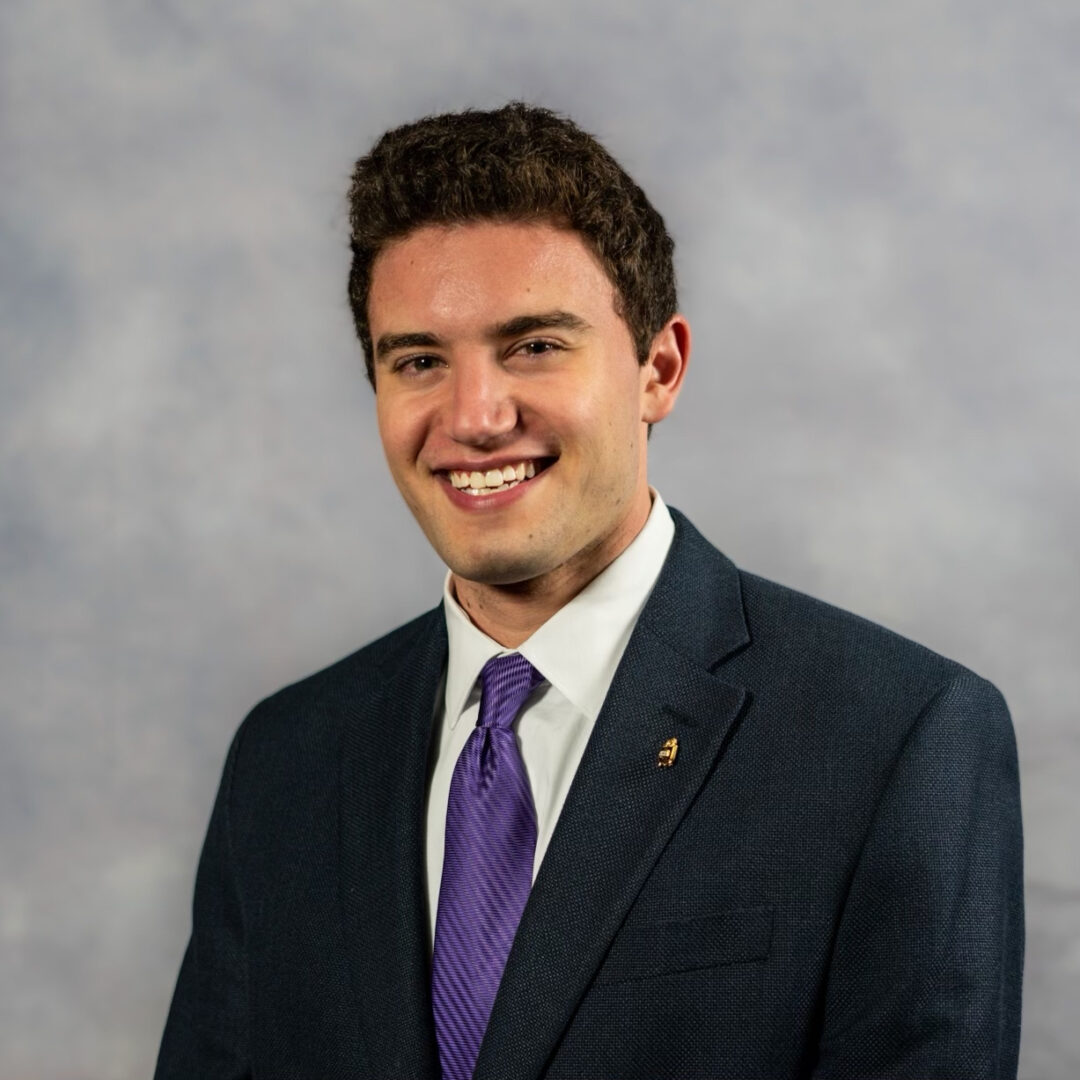
STATE COLLEGE — Josh Portney will resign from his seat on the State College Borough Council effective Jan. 13 at midnight, ending a term marked by persistent questioning, a focus on ethics and an often-uncomfortable persistence on understanding how public money is spent.
In a press release issued by Portney, he stated:
“I have made ethics a cornerstone of my public service on State College Borough Council. As such, I have made the difficult decision to resign from my elected office,” Portney said. “I deeply treasured this experience of serving my community and am truly excited for my colleagues to continue the work of responsibly facilitating State College’s growth and prominence as an international borough.”
“I am thankful to have had the faith and support of my constituents, and it is my hope that the next Council member to hold this position continues my efforts to bring financial transparency and responsibility to the Borough and the Centre Region.”
Portney confirmed his resignation in an exclusive interview with The Centre County Gazetteon Tuesday, Jan. 5. The decision, he said, comes after being offered a clerkship with the Commonwealth Court under the Honorable Judge Stella Tsai. That opportunity, under judicial ethics rules, requires him to step away from elected office.
“As you know, and as many people know, ethics have been a cornerstone of my council service,” Portney said. “It’s been sort of the underpinning for why I got into office. I want to serve the public, but I also want to do it ethically.”
Portney said he has been in law school for the past two and a half years and was recently tapped for the clerkship. Faced with the choice between continuing on council or moving forward with his legal career, he said the decision, while difficult, was clear.
“I really made a very difficult decision to resign,” he said. “I had to weigh the thing that I’ve been working on for the last two and a half years — law school and my future in the legal profession — and my life and future in the law.”
Looking back on his time in office, Portney said it is impossible to separate his tenure from the borough’s solar agreement, a deal he scrutinized extensively and often publicly.
“You can’t really write the history of my service without talking about the entanglements of the solar deal,” he said.
For Portney, that issue represented far more than renewable energy. He said it symbolized his broader role on council: questioning financial decisions, demanding transparency and pushing for deeper understanding when major public dollars were involved.
“It wasn’t just the solar deal,” he said. “It was the solar deal. It was the Whitehall Road Regional Park project. It was the Millbrook Marsh Park project. It was the purchase of a fire vehicle. It was everything that had a dollar sign I was on the front lines of.”
Beyond energy policy, Portney pointed to zoning as another area where he felt his perspective mattered.
“We have lots of people in the room who don’t live downtown,” he said. “They don’t see the street impact, the day-to-day impact of increased population, increased cars, empty storefronts or lines out the door of bars when other stores are shutting their doors.”
Portney said he also brought a student perspective to the discussion, noting that while the student population continues to grow, development should not be concentrated solely within the borough.
“We have an entire beautiful area called the Centre Region,” he said. “All the development does not need to be housed within the borough. It needs to be spread out amongst the townships, and we can do that in a responsible way.”
“That housing piece is the cookie we need to crack,” he said.
Among other accomplishments, Portney cited the passage of the responsible contractor ordinance, which he said still needs refinement to reach its full potential.
“When it passed, it was a rough draft,” he said. “Just like when they passed the oversight board years ago, it took time to get to a point where it was actually doing its job. I think that’s the same thing with the RCO.”
Portney also highlighted his opposition to the most recent borough budget, saying he was uncomfortable with the level of spending and concerned about how the borough funds essential services.
“We provide police, fire and emergency services for visitors that come into our town,” he said. “We love our visitors, but they don’t give us anything back financially. We need to rethink how we recoup tourism dollars.”
He said the borough must rethink how it recoups tourism-related revenue, pointing to admissions and entertainment taxes used in other Pennsylvania municipalities.
“When there are lines outside bars and people are paying $50 cover charges, we’re not taxing any of that,” he said. “There are ways within current law to do this.”
Asked about unfinished business, Portney said zoning remains the biggest issue left unresolved. He said council had been making strong progress until a meeting late last year shifted the conversation.
“We had really good progress up until that last zoning meeting,” he said. “Then we started going back on what we wanted for the West End, and the West End is this quagmire because no one really knows what to do with it.”
Portney said he plans to watch the process from a distance as a resident, adding that he hopes council can return to the momentum it once had.
“I’m excited to see what they do with it,” he said. “We have an opportunity to allow for development in a way that actually controls growth and is responsible.”
Affordable housing, Portney said, is the borough’s most pressing challenge and one with two distinct sides.
“We’re dealing with a twofold problem,” he said. “Affordable housing for working people and affordable housing for students.”
Portney said working residents are increasingly priced out of the borough and even the Centre Region, while students face soaring rents tied to newer developments.
“We need to tackle both,” he said. “But the most important thing right now is affordable housing for working people. We need families moving into the borough, and it needs to be affordable.”
Reflecting on what council service taught him, Portney described State College as a uniquely diverse community.
“I like to call it an international borough,” he said. “We have cultures from everywhere and ideologies from everywhere. And balancing that and actually understanding and not giving lip service and platitudes and saying, ‘Hey, we understand you.’”
He said meaningful governance requires more than platitudes.
“Talk is cheap,” he said. “Action is different.”
Portney said he made a point of talking with residents rather than talking at them, including by writing plain-language summaries of council meetings for those unable to attend or watch.
“We would go from disagreement to understanding,” he said. “That’s really what we need more of in this borough and in this country.”
As for regrets, Portney said he might have taken more time early in his term to understand the complexities of borough government before forming strong opinions.
“I was new to this,” he said. “I was the young guy on council, and that energy maybe ruffled some people the wrong way.”
Still, he said he would not change his approach.
“I’m proud of the energy that I brought,” he said.
For residents and whoever fills his seat, Portney offered consistent advice.
“Never stop asking questions,” he said. “Even when it’s annoying.”
He acknowledged that his questioning sometimes lengthened meetings and tested patience but said it is essential to public service.
“That’s government,” he said. “Never accept things the way they are until you fully understand what’s going on.”
“I liked making good trouble,” Portney said. “You need to make good trouble.”
Portney said Centre County will always be home. While he is stepping away from council, he said the principles that guided his service — ethics, transparency and asking one more question — will continue to shape his work moving forward.